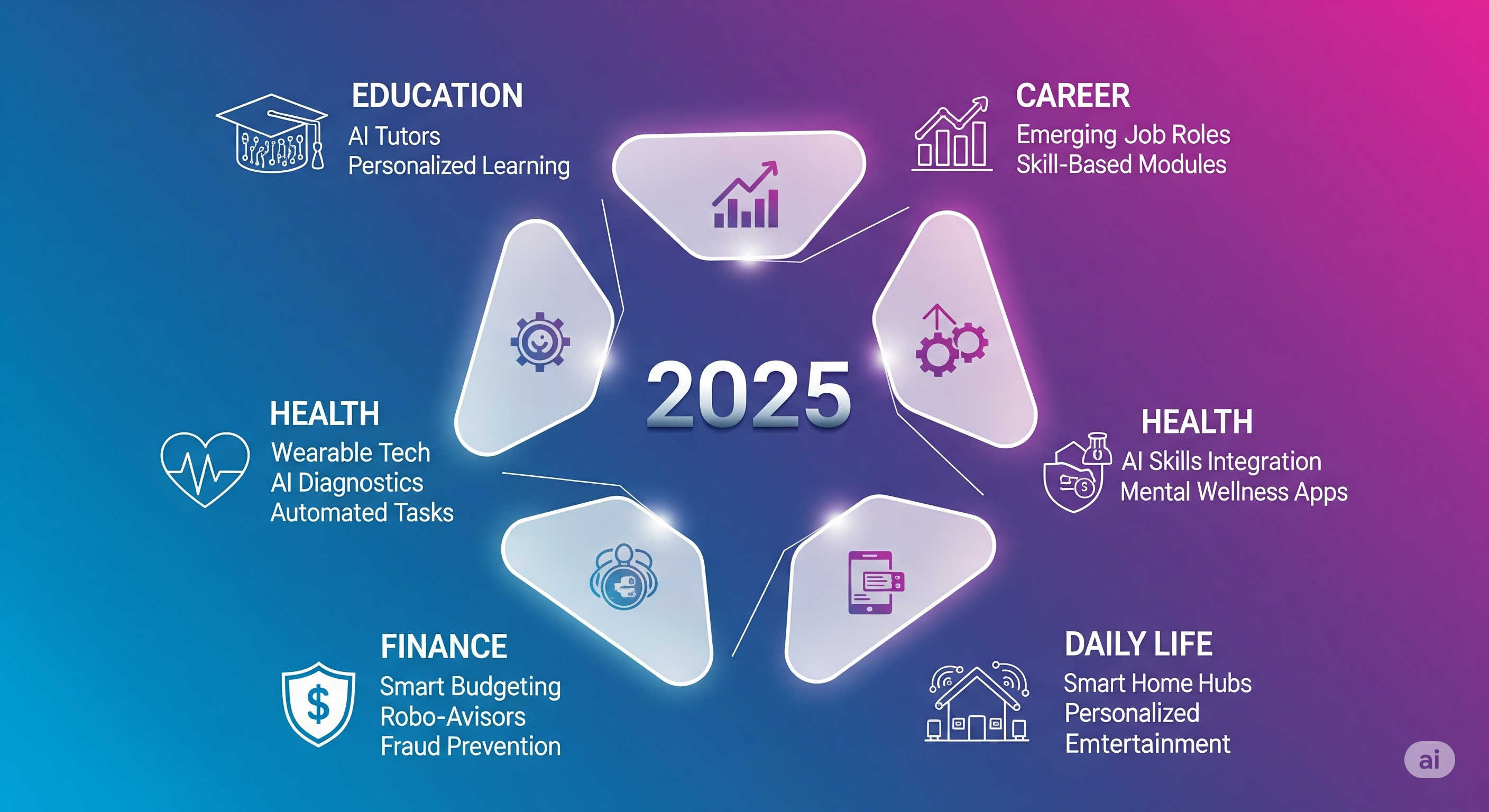
Introduction: Why AI Matters in 2025
just as smart assistants and self-driving cars have transitioned from future to everyday life in a much faster time span than anybody ever contemplated. In 2025, the many possibilities around AI within our everyday lives have become more numerous than ever before – in how we learn, do jobs, maintain health, and manage our finances and spending in our everyday lives.
The phrase “AI in everyday life 2025” more than describes a trend; the related reality is standardized in a large part of impacting many millions of people and families across the globe. As the AI technologies that we have access to continue to improve and further permeate daily life, adapting to this AI is no longer just a consideration; it is one of the keys to developing in one’s career, education, and even life.
AI in Education – Smarter Learning
In 2025, classrooms and learning platforms look drastically different than just a few years ago. AI has changed the landscape of education by making learning more personalized and accessible.
- Personalized Learning Paths – AI-based platforms assess a learner’s strengths, weaknesses and pace and use that information to create customized study plans. In other words, if a learner struggles with algebra and does well with geometry, the AI will change lessons and resources offered related to each subject, from that information.
- AI Tutors and Chatbots – Real-time AI tutors are now available 24/7 to answer questions, provide a better explanations, offer practice questions, etc., based upon their progress as learners.
- Smart Classrooms – AI data management systems are tracking engagement, attendance and performance analytics, and provide summaries for teachers to act upon areas in need of attention or improvement.
- Language Learning – Applications, like Duolingo, and ChatGPT based platforms, make learning a second or third language more interactive and with access to more real-time feedback.
For students, and lifelong learners, it’s clear that AI allows for knowledge to be no longer bound by geography, money, or even time.
AI in Career Growth – Jobs & Skills of the Future
The profession landscape as we approach 2025 is largely influenced by the automation from AI. Concern over job loss is a major point, and while that is true because of AI, there are new job opportunities and job paths that AI has created as well.
- Automation vs. Creativity – Automated automation tools have taken away repetitive work such as data entry and reports to be written from which employees can assist in other creative and strategic work.
- New AI Jobs – AI Prompt Engineer, Data Scientist, AI Ethics Expert, Automation Strategist are all jobs that everyone is looking for.
- Skill Development – The online world uses AI to offer and recommend learning courses based on people skills, learner engagement, and suggested learning paths that assist learners prepare for the jobs of the future.
- Remote and Hybrid – Online AI tools improve workflow efficiencies by supporting smart scheduling for meetings, by auto-summing meeting notes, and maintaining project management collaboration as well.
In order to remain relevant, professionals in business and education must be able to adapt, learn new AI related tools, and apply AI in their own profession to assist productivity. The reason why understanding and implementing AI in everyday life in 2025 is perhaps more about survival from a career perspective and less on the convenient aspects of technology and AI implementations.
AI in Health & Wellness – Personal Care Revolution
The best thing to invest in is health, and in 2025 the new AI is changing how we value and take care of both physical and mental health.
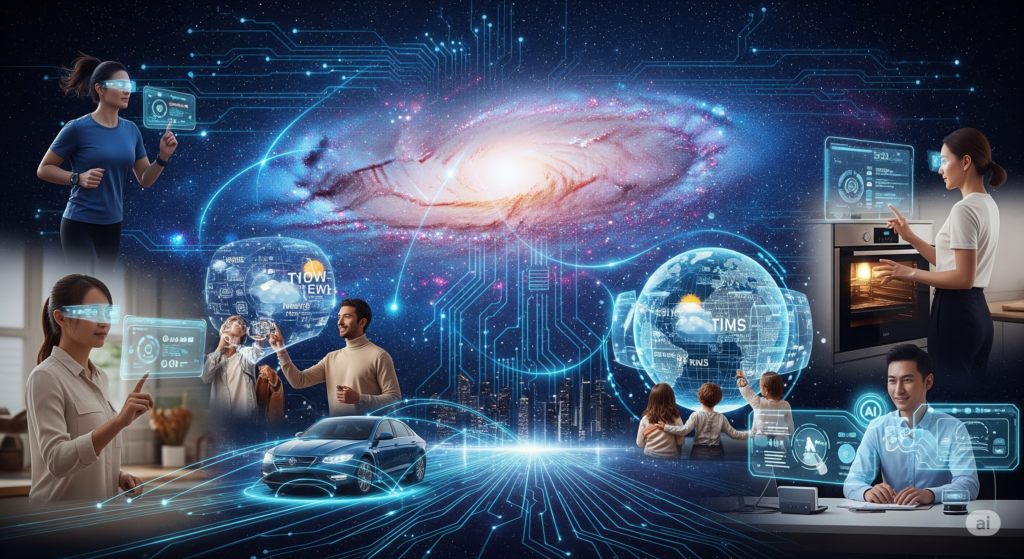
- Wearable Healthcare Devices – Smartwatch and fitness trackers don’t just track your steps, they also now monitor your heart health, stress levels and can predict illnesses even before you begin showing symptoms.
- AI Doctors & Telehealth – A virtual health assistant who can diagnose common problems, recommend treatments and follow-up with you remotely, if you need. This increasing technology in the health space will rely leisurely reduce visitation to hospitals and allow the world to access health care that would traditionally be unattainable, particularly in remote locations.
- Personalized Nutrition and Fitness – AI specific apps will build you a nutrition, meals plan based on a combination of DNA, lifestyle and fitness goals, that changes daily, based on what you do activity wise and how your body responds.
- Mental Health Journey Support – AI chatbots, texting or apps that provide instant emotional support or reminders to practice mindfulness or manage your stress levels.
The health AI of our everyday 2025 literally saving lives, proactively and preventively changing healthcare altogether.
AI in Finance – Smart Money Management
Managing money has always been difficult, but with the introduction of AI in finance, it has become smarter and more efficient in the year 2025.
- AI Budgeting Tools – Programs like Cleo, YNAB, and AI banking assistants are tracking spending, providing recommendations for savings, budgeting assistance, and bill tracking options.
- Fraud Detection – Working on a huge scale, banks use AI algorithms and instant analysis of transactions to detect unusual activity and minimize online fraud and cybercrime risk.
- Personalized Investments – Robo-advisors provide potential investment options based on financial goals, risk appetite, and trending market criteria.
- Credit & loan management – AI systems allow individuals to predict their chances of receiving a loan approval, monitor credit scores, or improve their financial health through monitored feedback loops.
So when all is said and done, AI at work in everyday life for 2025 is making people more financially literate, more secure, and better prepared for their financial futures.
How to Use AI Tools in Daily Life (Practical Apps)
AI is not just a tool used in various industries — it also exists within every nook and cranny of our personal everyday life. From the time we wake up to the hour we sleep, AI can be found throughout the hours of our day.
- Smart Homes — Smart devices like Alexa, Google Home, and AI enabled appliances manage your lighting, temperature level, and security.
- AI Writing & Productivity — Apps like ChatGPT, Jasper, and Notion AI declare themselves as helpful tools for even basic content management, brainstorming ideas, and providing assistance in setting and goals to stay on task.
- Travel & Navigation — AI apps can provide us with the fastest routes to our destination, predict traffic congestion, and recommend to us hotels or restaurants along the way.
- Shopping — Our e-commerce experiences are managed via AI accommodations that suggest products tailored toward our needs, constantly compare prices, or even allow us to virtually try-on clothing.
- Entertainment — Through apps like Netflix, Spotify, or YouTube — AI recommends entertainment options (movies, music, and videos) that we either want to watch, listen to, or be entertained by, based on any given user’s expressed preferences.
Even practical adoption of AI tools in everyday life 2025 is a way of doing everything faster, smarter, and even more enjoyable than before when undertaking typically routine activities.
Conclusion: Adapting to the AI-driven World
The year 2025 will be the year of AI in every part of life. You will no longer have the option to not use AI for your education, employment, health, finance, or personal life. By adopting AI, you will have opportunities that you never thought possible. Not adopting AI could put you out to pasture.
To be successful working in the world of AI, would require just a sense of curiosity, flexibility, and decisiveness to do so; and learning how to work with AI-both why AI is important to you, and how you will use AI in your life. The future will not be working against AI, it will be working with AI.
So, as you look around your life in 2025 remember this: Artificial Intelligence is not doom and gloom, AI is not taking over humanity; instead, AI is giving us more time to be human to think, create and develop.